 SENGER STEELMill-direct steel supplier
Channel Steel & I Beam
Hot rolled channel, I beam and H beam, 12 m lengths, galvanized on request.
Product description
Channel, I beam and H beam are the sections that carry a structure, so choosing between them is a structural decision before it is a purchasing one. All three put material where it resists bending - as far from the neutral axis as possible - but they differ in whether that material is on one axis or two, and that difference decides which one a design can use.
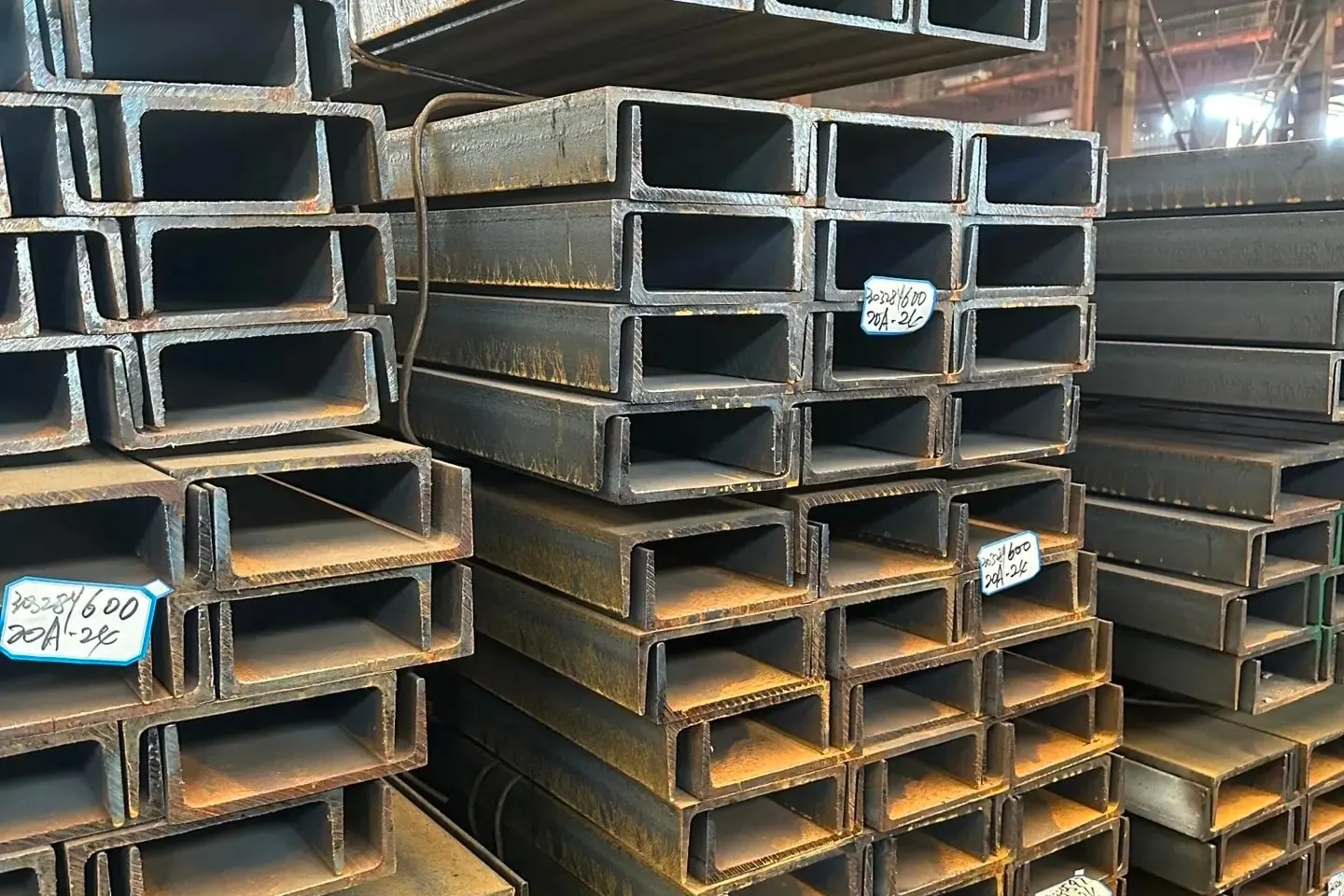
Channel steel, also called U channel or C section, has a web and two flanges on one side only. It is strong in the direction of the web and comparatively weak on the other axis, and it is awkward to connect because the shear centre sits outside the section. It is widely used for purlins, girts, trailer frames, machine bases and as the chord of a truss, where the load direction is known. Sizes run from 5# to 40#, meaning 50 mm to 400 mm in height.
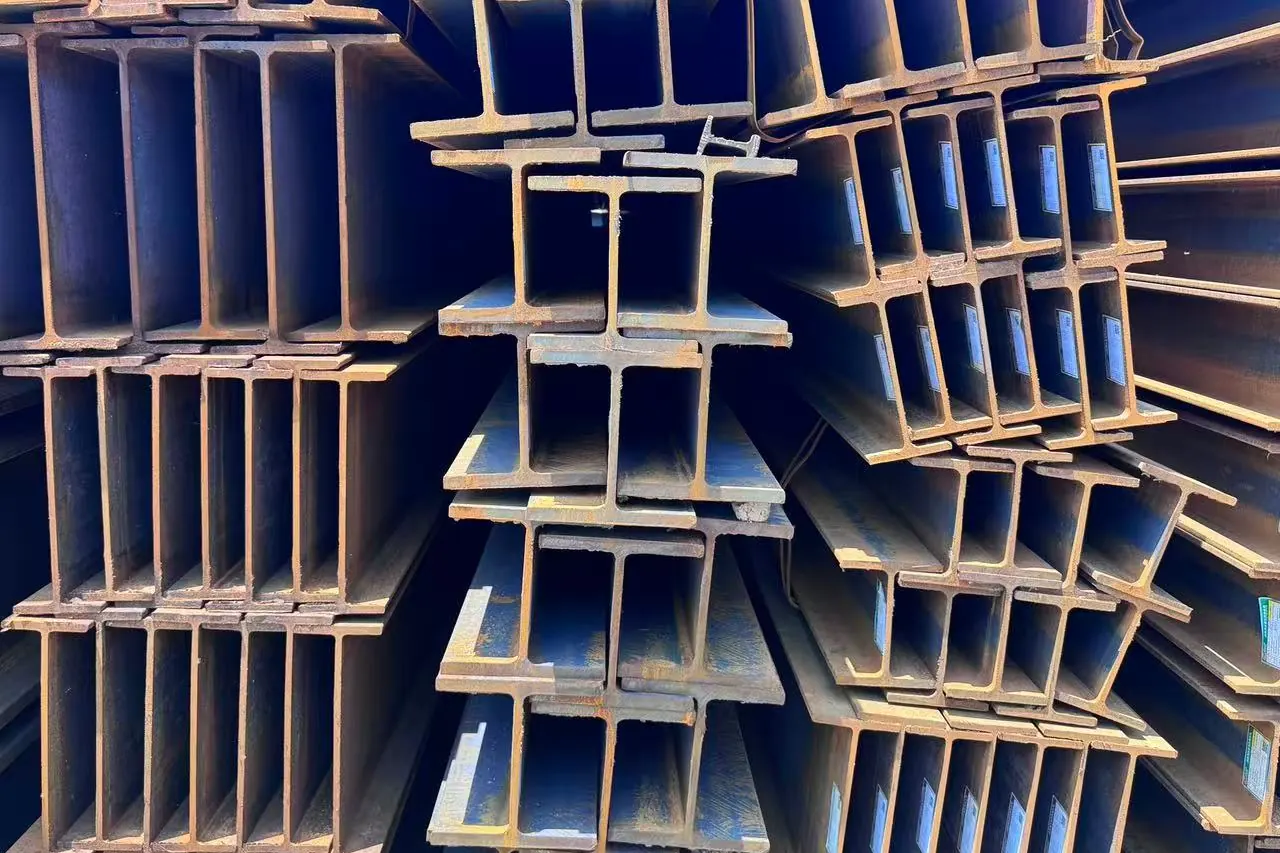
I beam, or universal beam, has flanges on both sides and is stronger on both axes than channel of comparable weight. Its flanges are tapered and relatively narrow, which makes it efficient for bending about the strong axis but less so where the load reverses. H beam has parallel flanges and a wider flange relative to its depth, which gives it much better strength about the weak axis and makes it the section of choice for columns as well as beams. I beam covers 10# to 63#, and H beam is available from 100x100 mm up to 900x300 mm.
For a buyer, the practical points are these. Confirm whether the design calls for I or H beam by name, because they are not interchangeable even where the depth is the same. Confirm the standard, as Chinese, Japanese, European and American designations define the same nominal size differently. And state whether the section will be galvanized, because that affects the schedule as well as the price.
Specifications
| Product name | Hot rolled channel steel & I beam |
|---|---|
| Channel size | 5# - 40# (50 - 400 mm height) |
| I beam size | 10# - 63# (100 - 630 mm height) |
| H beam | 100x100 - 900x300 mm available on request |
| Grades | S235JR, S275JR, S355JR, SS400, ST37, ST52, Q235, Q355 |
| Standard | GB/T 706, JIS G3192, EN 10025 |
| Length | 5800, 6000, 11800, 12000 mm, or customized |
| MOQ | 25 MT per full container, small order negotiable |
| Package | Bundled with steel strips, export seaworthy |
| Delivery time | 15 - 25 days after deposit, stock sizes faster |
| Payment | Confirmed per order - T/T or L/C at sight |
| Port of loading | Qingdao Port / Tianjin Port |
| Documents | MTC EN 10204 3.1, commercial invoice, packing list, CO, B/L |
| Galvanizing | Hot-dip galvanizing processing available upon request |
Grades and equivalent standards
| S235JR / S275JR | Standard EN 10025-2. Min. yield 235 / 275 MPa. General structural framing, purlins and girts. |
|---|---|
| S355JR | Standard EN 10025-2. Min. yield 355 MPa. Heavy structures, crane rails, long span beams. |
| SS400 | Standard JIS G3192. Min. yield 245 MPa. General structures and machinery parts. |
| Q235B / Q355B | Standard GB/T 706 / GB/T 700. Min. yield 235 / 355 MPa. Domestic structural and general engineering work. |
| ST37 / ST52 | Former DIN designations, now S235JR / S355JR. Common on older drawings. |
| A36 | Standard ASTM A36. Min. yield 250 MPa, tensile 400-550 MPa. Construction and general fabrication. |
Yield values are for thickness 16 mm and under. Values are typical for each standard; the actual heat is certified on the mill test certificate. Section properties must be taken from the standard applicable to your design.
We support hot-dip galvanizing processing for carbon steel profiles.
Typical applications
- Building frames and columns
- Purlins, girts and roof framing
- Mezzanine and platform structures
- Bridges and infrastructure projects
- Crane runways and rails
- Trailer, truck and chassis frames
- Machine bases and supports
- Transmission tower members
- Warehouse racking and shelving
- Marine and port structures
Channel, I beam and H beam compared
Channel has flanges on one side only. It is efficient where the load direction is known and consistent, such as a purlin or a trailer frame, and it is cheap for the strength it provides on its strong axis. It is poor as a column and awkward where loads reverse, because the shear centre lies outside the section and it twists readily.
I beam has flanges on both sides with tapered, relatively narrow flanges, which makes it efficient for bending about the strong axis. H beam has parallel, wider flanges, so it is far stronger about the weak axis and is suitable for columns as well as beams. I beam and H beam are not interchangeable even at the same depth - check what the design actually specifies, and confirm the standard, since the same nominal size is defined differently in Chinese, Japanese, European and American practice.
Galvanizing, packing and loading
Hot-dip galvanizing is available as part of the order and is usual for exposed structural work, because it covers edges and inside corners that paint cannot protect. State the coating weight, since it determines service life in the same way as for galvanized sheet.
Beams and channels ship in bundles strapped with steel bands, loaded into containers or breakbulk for long and heavy sections. Documents are the EN 10204 3.1 mill test certificate, invoice, packing list, certificate of origin and bill of lading. Loading is at Qingdao or Tianjin.
Frequently asked questions
What is the difference between I beam and H beam?
I beam has tapered, relatively narrow flanges and is efficient for bending about the strong axis. H beam has parallel, wider flanges, which gives it much better strength about the weak axis and makes it suitable for columns as well as beams. They are not interchangeable even at the same depth, so check which one the design specifies.
Can I use channel instead of I beam?
Only where the design allows it. Channel has flanges on one side, so it is comparatively weak on the other axis and twists readily, because its shear centre lies outside the section. It is efficient for purlins, girts and frames where the load direction is known. For columns and reversing loads, use a section with flanges on both sides.
How are the sizes designated?
Channel runs from 5# to 40# and I beam from 10# to 63#, where the number is the section height in centimetres. H beam is designated by flange width and section height, such as 100x100 mm up to 900x300 mm. Confirm the standard, because the same nominal size is defined differently across Chinese, Japanese, European and American practice.
Should the sections be galvanized?
For exposed or humid service, yes. Galvanizing covers the edges and inside corners where paint is thin or missing, which is exactly where corrosion begins. State the coating weight so the service life is defined rather than assumed. For dry indoor service, paint or bare steel is usually sufficient.
What lengths can you supply?
Standard lengths are 6 m and 12 m, with 5800 mm, 6000 mm, 11800 mm and 12000 mm the common export lengths. Heavy sections may ship breakbulk rather than in containers. Cut lengths are available on request.
What is the minimum order quantity and delivery time?
25 MT for a full container, small orders negotiable for stock sizes. Delivery is normally 15 to 25 days after deposit. Payment is confirmed per order - T/T or irrevocable L/C at sight.
Other products in this series
Request a quotation for channel steel & i beam
Send your inquiry, we will reply within 24 hours.
Get a Quotation
Send grade, size, quantity and destination port. You get price, lead time and packing back within 24 hours (Mon-Sat).