 SENGER STEELMill-direct steel supplier
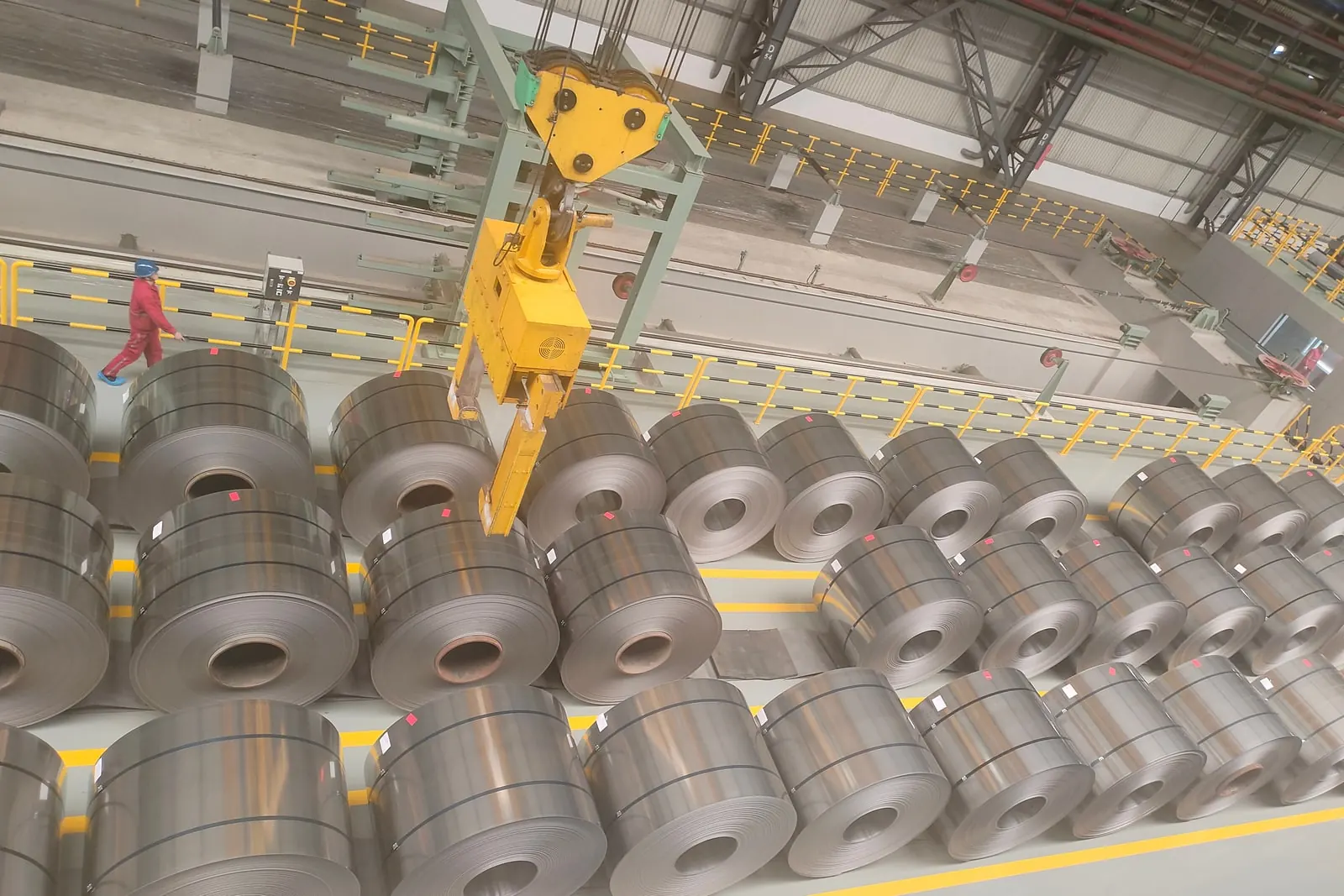
Stainless Steel Coil
Cold rolled 201, 304 and 316L coil from 0.1 mm, in 2B, BA, 8K and HL finishes.
Product description
Stainless steel coil is chosen for one of two reasons: it has to resist corrosion, or it has to look like it does. Which of the two you are buying decides the grade and the surface finish, and those two together decide the price far more than the thickness does.
The 300 series - 304, 304L, 316 and 316L - is the standard corrosion resistant family. 304 covers food, kitchen and general industrial work; 316L adds molybdenum and is what you need where chlorides, salt or aggressive chemicals are present, such as coastal installations, chemical plant and medical equipment. The 200 series, mainly 201, uses manganese instead of part of the nickel and costs less, but it is less corrosion resistant and less suitable for severe service. The 400 series, such as 430, is ferritic and magnetic, used for appliances and trim where corrosion demand is modest.
Surface finish is specified alongside the grade. 2B is the normal cold rolled mill finish and the default for industrial use. BA, bright annealed, is smoother and brighter and is used for appliances and visible parts. 8K is a mirror polish, HL a brushed hairline - both decorative. No.1 is the hot rolled, annealed and pickled finish used for heavier gauges where finish does not matter.
Two properties decide whether the coil suits your line. The first is drawability, because deep drawn parts require a grade and a finish chosen for forming rather than for looks. The second is coil weight and inner diameter, because stainless coil is heavier per unit of volume and your uncoiler has a limit. Tell us both.
Specifications
| Product name | Stainless steel coil, cold rolled |
|---|---|
| Grades | 201, 304L, 316L, 316Ti, 321, 430, 904L, 2205, NO8825, A286, Monel 400, 2507 |
| Thickness | 0.1 mm - 16 mm |
| Width | 12.7 mm - 1500 mm, slit to width available |
| Surface | NO.1, BA, 2B, 4B, 8K, HL |
| Deep drawing | Available on request |
| MOQ | 25 MT per full container, small order negotiable |
| Package | Standard seaworthy export packing |
| Delivery time | 15 - 25 days after deposit, stock sizes faster |
| Payment | Confirmed per order - T/T or L/C at sight |
| Port of loading | Qingdao Port / Tianjin Port |
| Documents | MTC EN 10204 3.1, commercial invoice, packing list, CO, B/L |
Grades and equivalent standards
| 201 | Standard ASTM A240 / JIS G4305. Cr-Mn-Ni austenitic, the lowest cost austenitic option. Trays, kitchenware, trim and indoor panels. |
|---|---|
| 304 / 304L | Standard ASTM A240. 18 percent chromium, 8 percent nickel. The general purpose corrosion resistant grade. Food, kitchen, industrial, architectural. |
| 316 / 316L | Standard ASTM A240. Adds molybdenum. Better resistance to chlorides and chemicals. Coastal, chemical, pharmaceutical and medical work. |
| 321 / 316Ti | Standard ASTM A240. Titanium stabilised for elevated temperature service. Exhausts, heat exchangers, boiler parts. |
| 430 / 410 | Standard ASTM A240. Ferritic and martensitic, magnetic. Appliances, trim, cutlery, and parts that will be polished or plated. |
| 2205 / 2507 | Standard ASTM A240. Duplex and super duplex. Roughly double the yield strength of 304 with high resistance to chloride stress corrosion. |
| 904L / 254SMO | Super austenitic grades for severe chemical and seawater service. |
Values are typical for each grade; the actual heat is certified on the mill test certificate. Corrosion performance depends on the service environment, not on the grade alone.
Typical applications
- Kitchen equipment and sinks
- Home appliances and trim
- Deep drawn parts and housings
- Architectural panels and cladding
- Food and beverage processing equipment
- Chemical and pharmaceutical plant
- Heat exchangers and exhaust systems
- Water tanks and pipework
- Medical and laboratory equipment
- Elevator and escalator cladding
Surface finishes explained
2B is the standard cold rolled, annealed and pickled finish and the one to choose unless you have a specific reason otherwise - it is the cheapest and the most widely available. BA, bright annealed, is produced under a controlled atmosphere so the surface is smoother and brighter, which suits visible appliance parts and further polishing. No.1 is the hot rolled finish for heavier gauges.
8K is a mirror polish and HL a brushed hairline; both are decorative and both are usually applied to the finished part rather than supplied on the coil, because forming and welding will damage the surface. If you need a decorative finish and your process involves forming, decide which operation comes last before you order.
Packing and loading
Stainless coil is protected with paper or film interleaving and edge protection, strapped through the eye with steel bands and wrapped in waterproof material. Coils are loaded eye-to-sky or eye-to-wall depending on your handling equipment. Loading is at Qingdao or Tianjin.
Because stainless is judged on surface, transit damage is a claim waiting to happen. Tell us if the material is destined for a visible application and we will specify heavier protection.
Frequently asked questions
Should I choose 304 or 316L?
Choose 316L where chlorides or aggressive chemicals are present - coastal sites, salt exposure, chemical and pharmaceutical plant, and any process where the surface may be attacked by cleaning agents. For inland food, kitchen and general industrial work, 304 or 304L is normally sufficient and costs less. If the environment is the deciding factor, tell us where the part will be used.
What is the difference between 2B and BA finish?
2B is the standard cold rolled, annealed and pickled finish - matte, economical and suitable for most industrial and formed parts. BA, bright annealed, is processed in a controlled atmosphere and gives a smoother, brighter surface for visible components and for parts that will be polished afterwards. BA costs more.
Can you slit the coil to width?
Yes. Give us the finished width and the tolerance you can accept and we will confirm what is achievable. Narrow slit coil is strapped separately, and edge condition is confirmed before production.
Is 201 a safe substitute for 304?
Only if the corrosion demand is low and the part stays indoors. 201 uses manganese in place of part of the nickel, so it is more susceptible to corrosion and to stress cracking in chloride environments, and it does not behave the same way in drawing or welding. It is a cost reduction, not an equivalent grade.
Do you supply mill test certificates?
Yes - an EN 10204 3.1 mill test certificate with chemical composition, mechanical properties and heat number for every heat. Third party inspection such as SGS or BV can be arranged before loading.
What is the minimum order quantity and delivery time?
25 MT for a full container, small orders negotiable for stock sizes. Delivery is normally 15 to 25 days after deposit. Payment is confirmed per order - T/T or irrevocable L/C at sight.
Other products in this series
Request a quotation for stainless steel coil
Send your inquiry, we will reply within 24 hours.
Get a Quotation
Send grade, size, quantity and destination port. You get price, lead time and packing back within 24 hours (Mon-Sat).